
Blog Post
Security Camera Placement: A Practical Guide
A high-resolution camera pointed the wrong way records very little of use. Good placement is mostly common sense plus a few details that are easy to miss.
Start with the entry points
Most coverage plans begin with the front door, the back door, garage doors and any ground-floor or basement windows that are easy to reach. For a business, add loading areas, staff entrances, cash-handling areas and the parking lot.
Mount height and angle
- Mount high enough to be out of easy reach, but low enough to capture faces. A camera far overhead mostly records the tops of heads.
- Angle the camera slightly down and toward the approach, so people walk toward the lens rather than across it.
- Avoid pointing the lens at a bright sky or directly at a light source, which can silhouette the subject.
Think about light
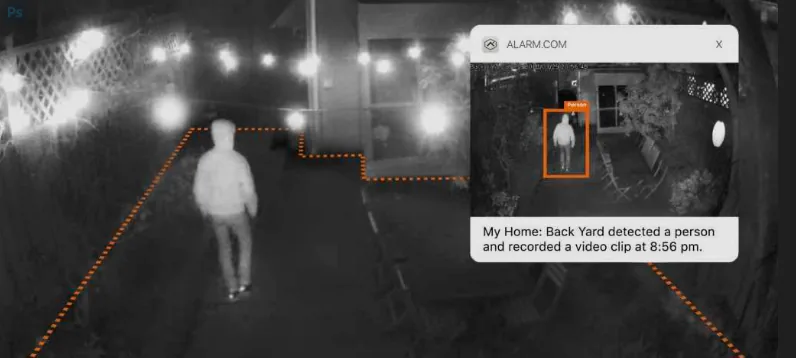
Check how the area looks at night. Many cameras switch to infrared in the dark, which can reflect off nearby surfaces, so avoid mounting right next to a wall or soffit that bounces light back into the lens. Where possible, pair cameras with lighting that illuminates the approach.
Protect the camera and the cable
- Choose weather-rated equipment for outdoor locations.
- Keep cables out of easy reach and protected from the weather.
- Place cameras where branches and signs will not block the view as the seasons change.
Respect privacy
Point cameras at your own property. Aim them away from neighbours’ windows and yards, and consider posting a notice where cameras record people entering. Businesses that record employees or customers should check the privacy rules that apply to them in Ontario and Canada, and get professional advice where needed.
Common mistakes
- Putting all cameras at the front and leaving the back uncovered.
- Mounting too high or too low.
- Ignoring night-time conditions.
- Forgetting to check the view after the camera is installed.
After installation, review the live view and a night recording from each camera, and adjust the angle before you consider the job finished.
Have questions about your own property? Contact us to talk about your property.